2nd August 2024
Communicating what car insurance does and doesn't cover for electric vehicles
Electric cars are growing in popularity. How are insurers and price comparison websites doing when it comes to communicating cover for these vehicles?
2nd August 2024
Electric cars are growing in popularity. How are insurers and price comparison websites doing when it comes to communicating cover for these vehicles?

One million drivers in the UK now drive electric vehicles. For these drivers, buying car insurance tends to be more difficult: not only do they often face higher prices compared to drivers of petrol cars (due, in part, to higher costs of electric cars), they also have to navigate the additional challenges of knowing what extra covers they need for an electric car.
Drivers of electric cars will need to insure the extras and accessories required to run an electric vehicle, such as charging cables or charging wall points (though this might be insured with their home insurance). They may also need to seek guidance on how their car insurance works if they lease the battery within their electric car.
Out of charge recovery is also a feature that is likely to be valued by electric car drivers, though this can be provided via a breakdown service so is easily available as an add on.
Many car insurers are now offering cover relevant for electric vehicles. 50% of the market, for example, is offering cover for electric charging cables. Where insurers could improve is communicating this cover to customers.
Brands like LV=, IGO4, and Admiral now have dedicated pages on their websites which detail what cover they offer for electric vehicles. However, these pages are usually only provided by brands that offer this cover with their policies, as seen below with Admiral.
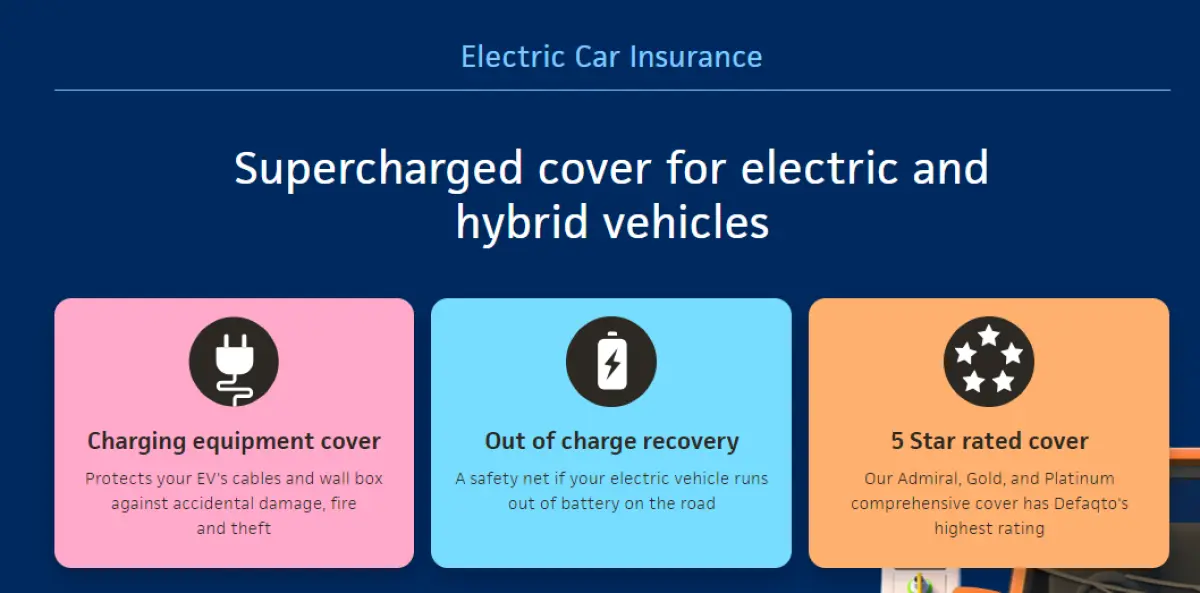
Ageas is an example of a brand that does cover charging cables and home chargers, identifying them in their policy document as accessories that count as part of the car. Unlike Admiral though, they don’t inform their customers of this cover outside of a small passage in the policy document.
The clarity of communications around electric vehicle cover is more limited on comparison sites - the channel through which many customers buy their car insurance. On GoCompare (below), very little information is given on relevant covers for electric cars when getting a quote for an electric vehicle.
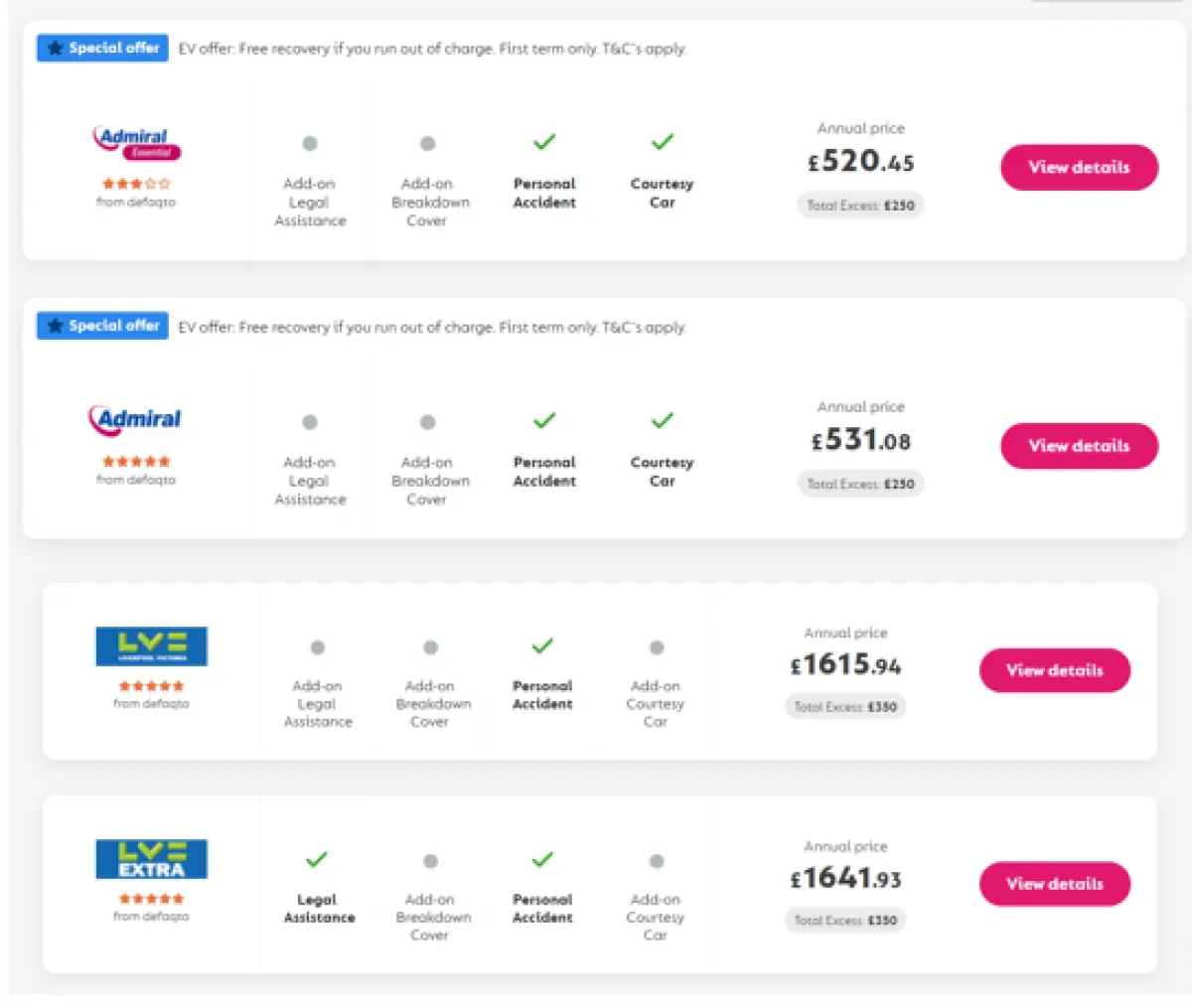
Admiral’s offer of out-of-charge recovery - which is useful information - is placed in a “special offer” note. LV= also offers out-of-charge recovery, yet customers would likely think that only Admiral has this extra feature from this screen.
Ideally, when a customer gets a quote for an electric vehicle, there would be a few extra tick boxes to show whether the extra covers and features relevant to electric cars are included with the policy.
Insurers’ online purchase journeys could also be improved. Even brands that have pages on electric car coverage are yet to adapt their purchase journeys to make it clear to customers during the quote process what is and isn’t covered for electric cars. Even brands that are generally excellent for making their cover and limits clear, such as Churchill, give no mention of these features.
The best in class is AXA, whose online purchase journey clearly states what is covered with a concise explainer. LV= and Admiral also both have useful sections that will help their potential customers.
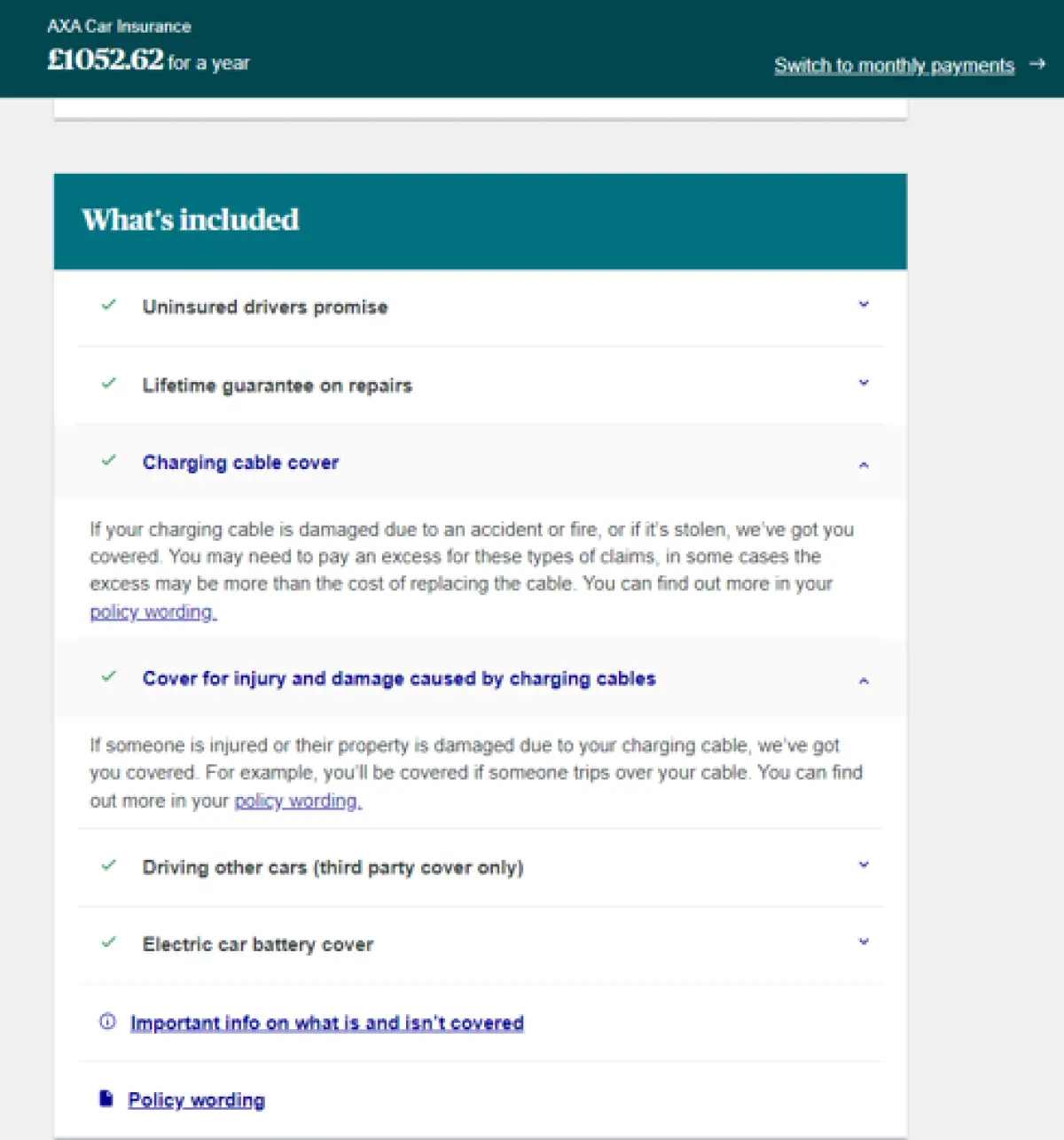
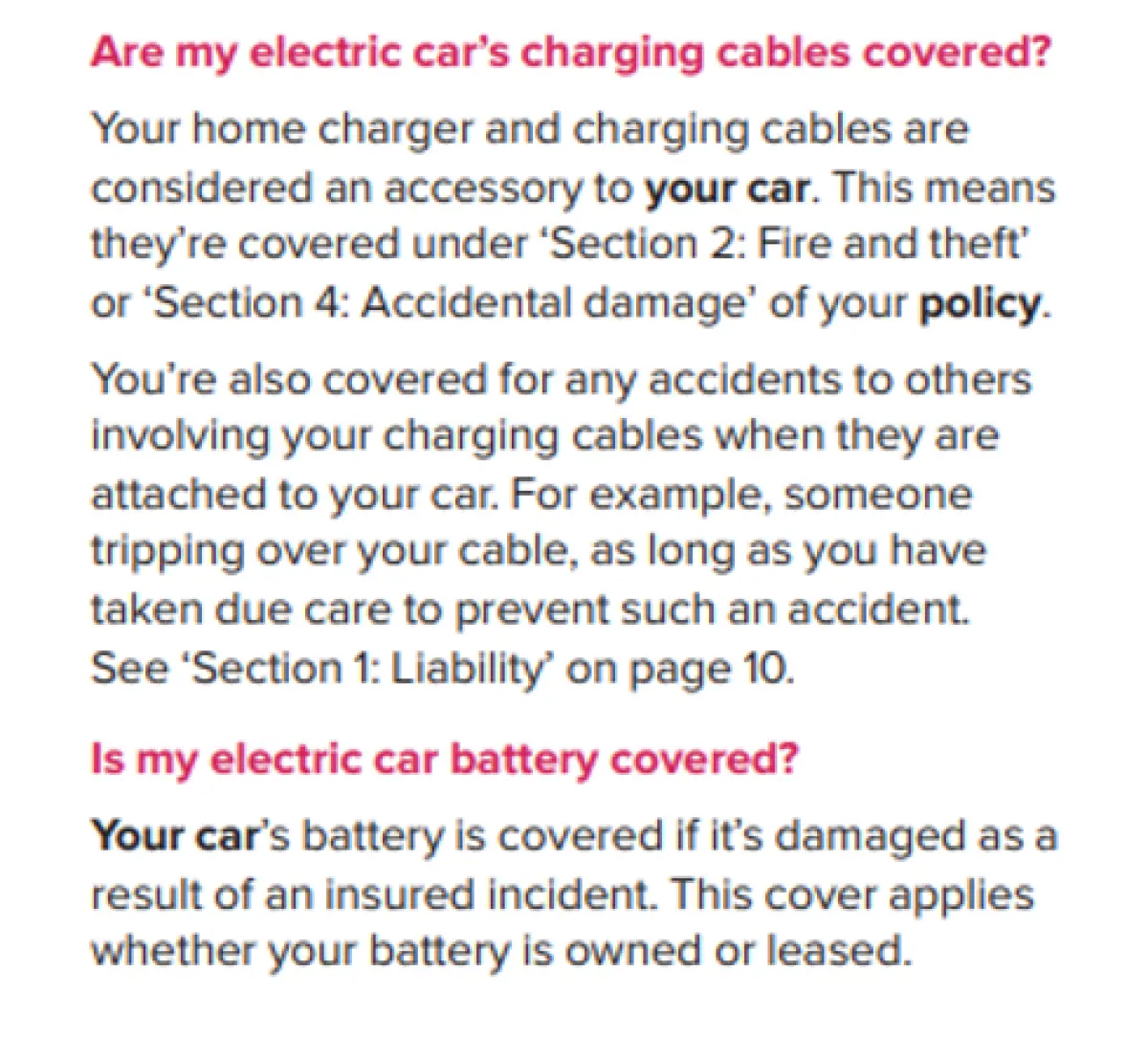
Both comparison sites and all insurers can make simple changes to their websites and purchase journeys to help their customers understand the cover given for electric vehicles.
To help customers better understand the level of cover given by different policies for electric vehicles, Fairer Finance has launched a new product rating for electric vehicle car insurance. This means that would-be customers can see, at a glance, which policies are suitable for electric cars.
You can read our methodology document here. We hope brands and comparison sites adopt a similar approach to help their customers.