16th December 2024
Improving Consumer Understanding of Motor Legal Cover
Motor Legal Cover is a common add-on but is often misunderstood. What can insurers do to help customers better understand it?
16th December 2024
Motor Legal Cover is a common add-on but is often misunderstood. What can insurers do to help customers better understand it?

Motor Legal Cover is an incredibly common add-on for motor insurance. Nearly 20 million customers bought this cover as an add-on or part of their car insurance in 2023 and 40% of motor insurers’ add-on revenue comes from motor legal cover. However, while this type of policy is very common, its claim rate is low. Only 0.8% of policies receive a claim - that’s a much lower claims rate than car insurance (10%), and a lower rate than the recently-sanctioned GAP insurance market. These numbers pose two questions: are insurers marketing Motor Legal Cover correctly and is it providing fair value to customers?
Motor Legal Cover is cheap. The average price is £26 according to data gathered by Consumer Intelligence, representing a small fraction of the cost of car insurance. However, historical data would suggest that consumers believe motor legal policies provide cover that’s already provided by all car insurance, even third-party car insurance (which covers fewer things than comprehensive car insurance).
A report by the FCA back in 2013 on motor legal cover found that the majority of customers buying motor legal cover assumed it provided cover that is standard with all car insurance. When asked, 81% of consumers with Motor Legal Cover surveyed incorrectly said that their MLEI policy would pay any legal costs associated with an accident if they were at fault.
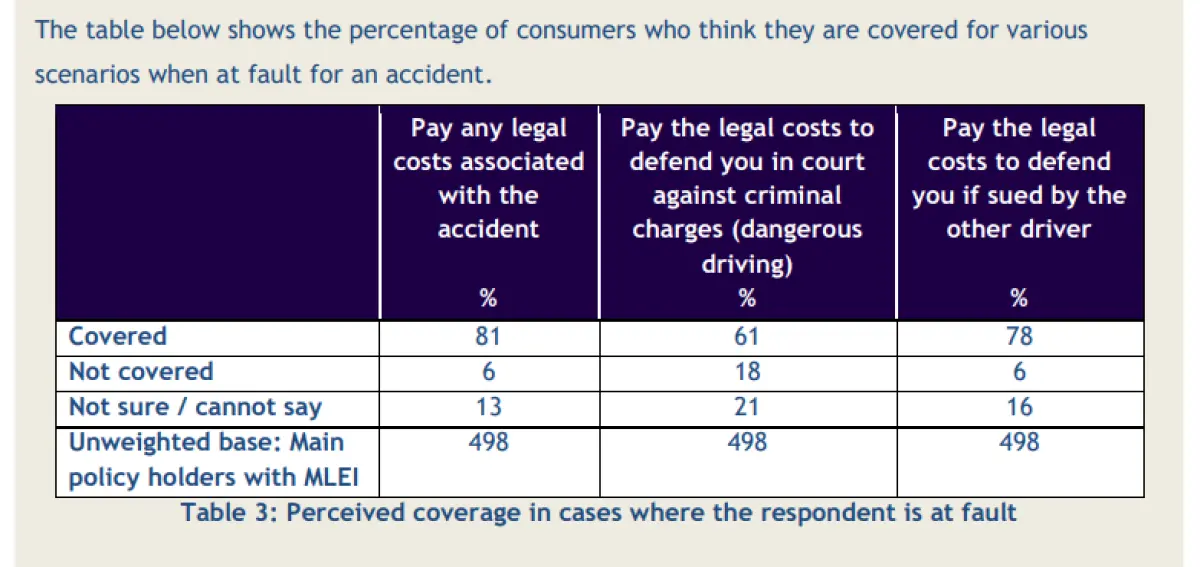
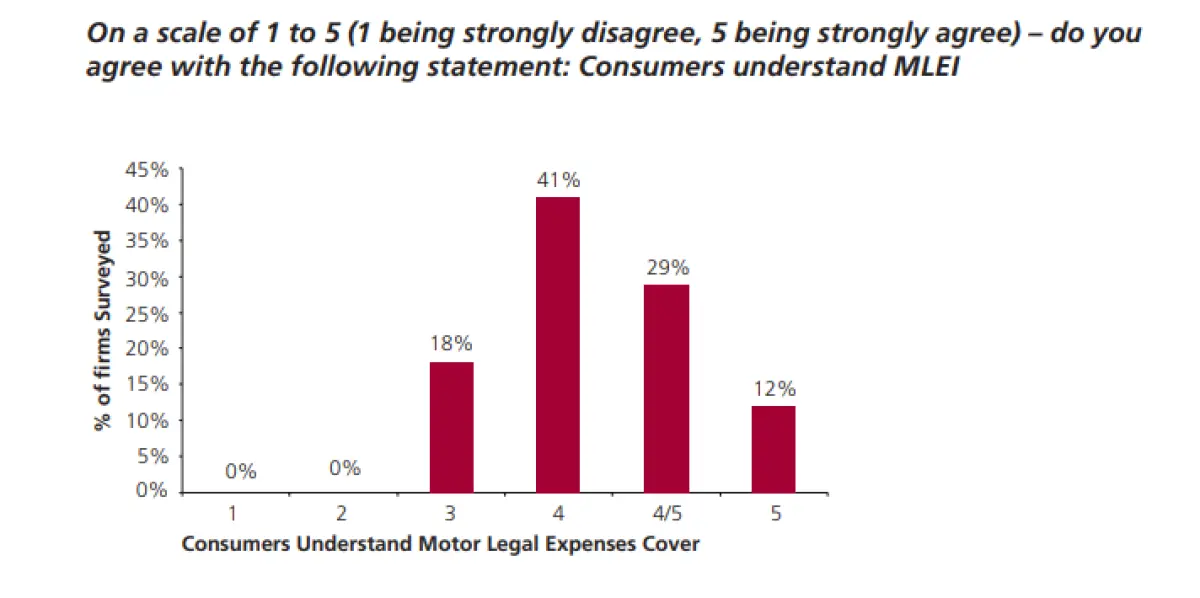
Since this polling was undertaken, insurers have had to change how they market Motor Legal Cover but despite it being over 10 years out of date consumer understanding is unlikely to have changed given how this information is presented in purchase journeys. It is still the case that very few providers make it clear what cover is already provided by their car insurance, even if they are clear that Motor Legal is designed for recovering losses when the driver is not at fault.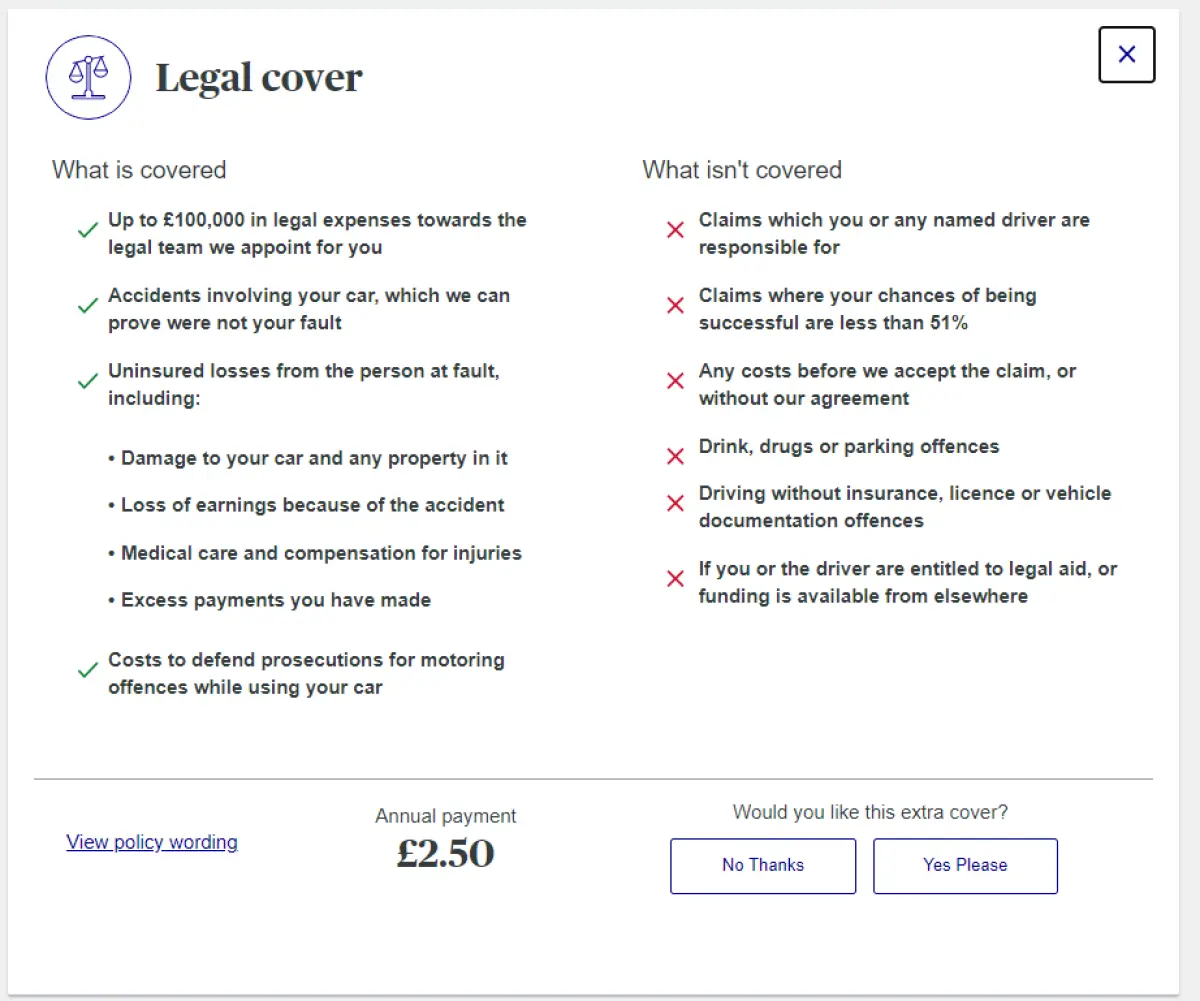
Personal Accident add-ons give a sense of how providers might give more context when selling motor legal cover. For Personal Accident policies, providers usually state the standard cover limit that comes with the base car insurance policy, to ensure customers understand they already have a certain amount of cover.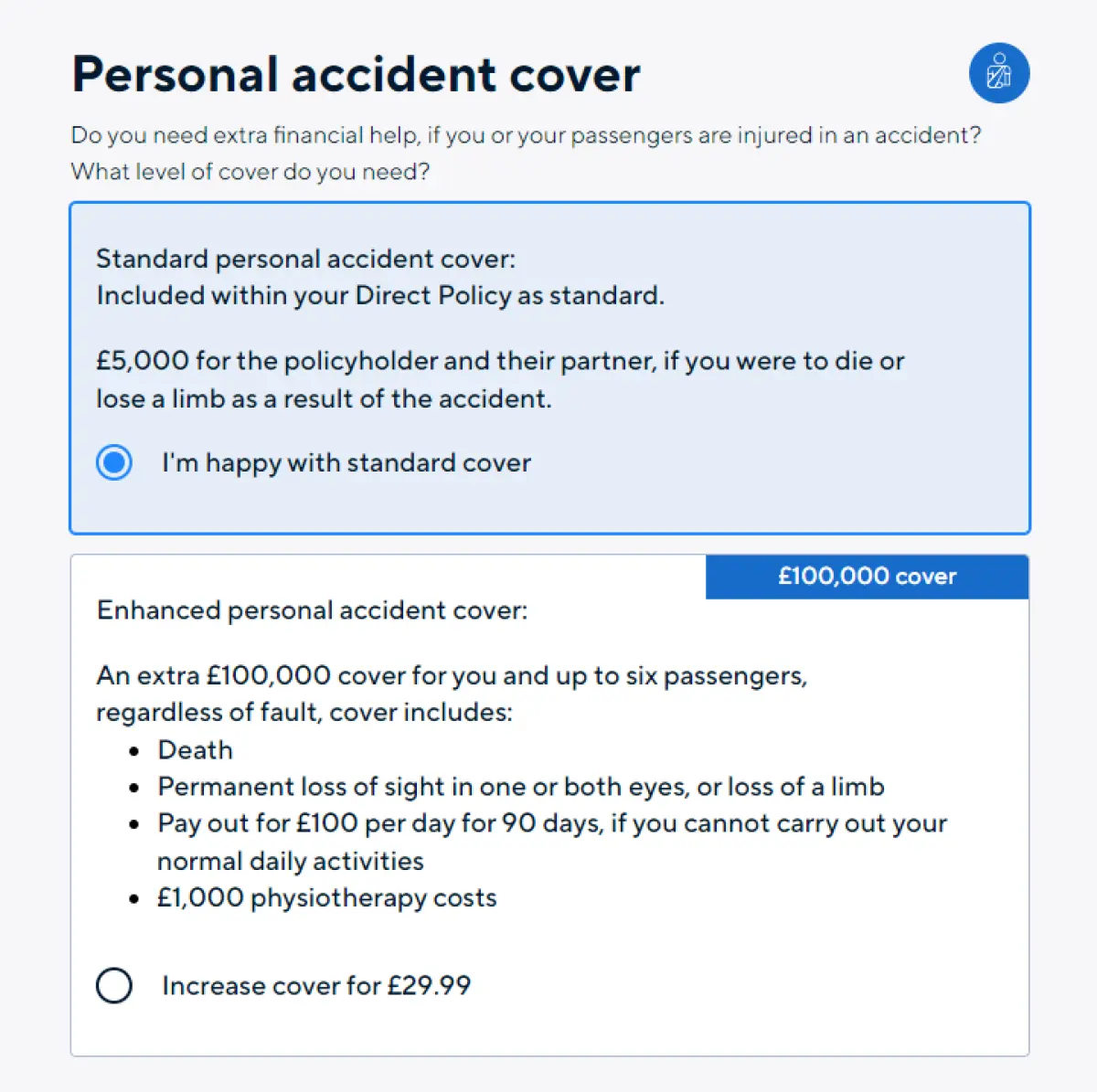
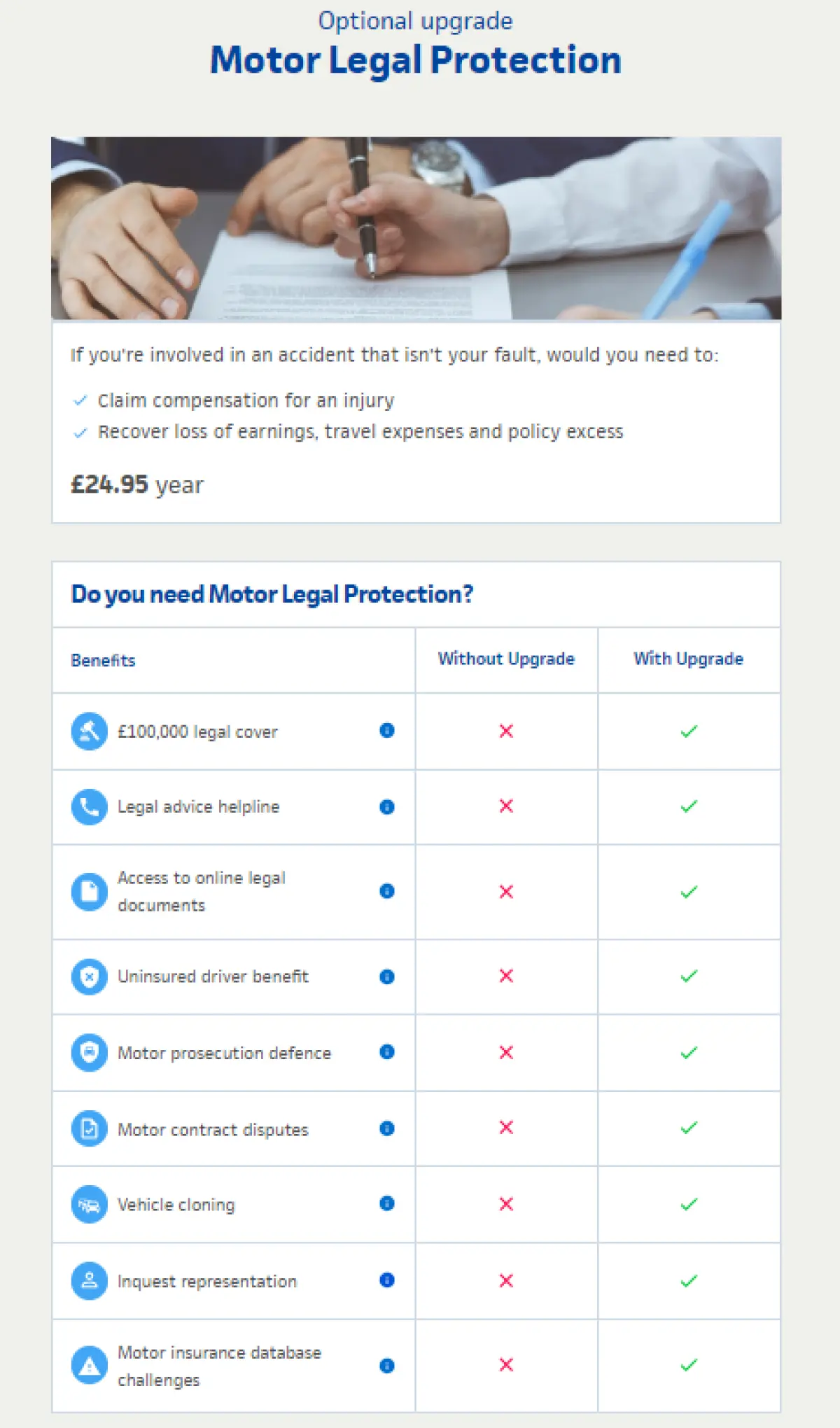
Under Consumer duty, firms must provide clear and understandable information and offer products that are right for customers so they can make good financial decisions. Given that the majority of customers fail to understand Motor Legal Cover and are buying cover they likely do not need, insurers are failing to fulfil their consumer duty requirements.
Insurers should have to clearly state that their car insurance policy will cover legal costs associated with an at-fault accident. Critically, they should do this alongside selling their Motor Legal add-on, not separately, so the information is being displayed at the optimum time to facilitate good financial decision-making.
Given that no car insurers are currently displaying motor legal cover with reference to the legal cover already provided as standard, the FCA should issue guidance to allow insurers to adapt their purchase journeys to better inform their customers about this add-on.