It's coming up on 10 years since the FCA concluded its last study into the credit card market. While there were many areas that the regulator could have looked at in this complex sector - it decided to zone in on ensuring that fewer people were holding debt on credit cards for a very long period of time. The concept of 'persistent debt' was was born - and new rules were put in place to force providers to more proactively deal with customers who end up paying more in interest than they have borrowed.
While this was a step in the right direction, it was a fairly gentle intervention. Firms have to first write to customers if they have paid more in interest, fees and charges than they have borrowed after 18 months - and nudge them to increase their monthly payments. After 27 months, if things have not improved, they send another reminder. And if they are still in persistent debt at 36 months, they have to offer options to support customers to pay their debt off more quickly - which might include reducing interest rates.
According to the latest FCA financial lives survey, the persistent debt rules have had very little impact. There are still 2.8 million people in persistent debt - and the reality is that these are often lenders' most profitable customers.
The elephant in the room
It was strange to me back in 2016, that the FCA completely side stepped the issue of the unfair cross-subsidies in the credit card market. For over two decades, the greatest competition in the credit card market has been centred around 0% promotional offers. These have offered phenomenal value to wealthier, more financially resilient customers - who borrow for free and pay off their balance before the introductory period expired.
But someone has to pay for this free borrowing - and that is of course the customers who don't manage to clear their balance - and who then end up paying interest of 20-30% a year on their debt.
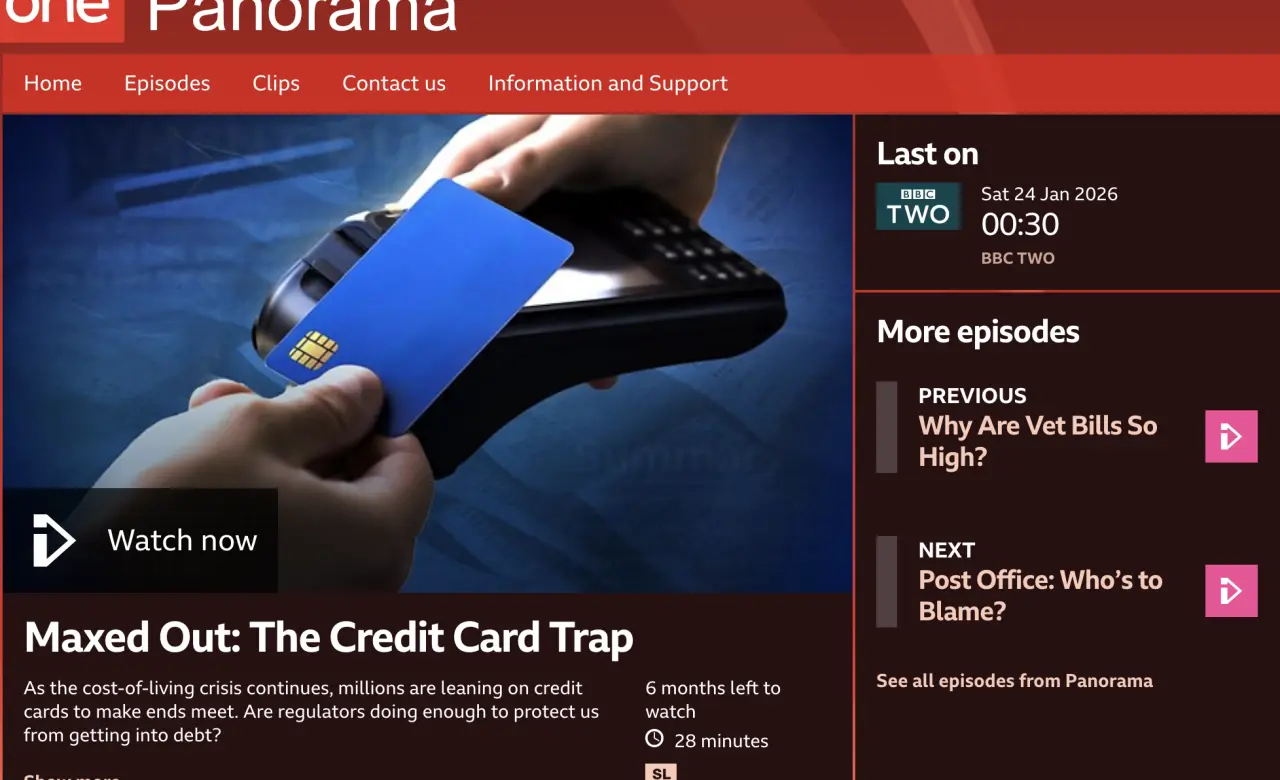
Debt is often talked about as a slippery slope - and the Panorama documentary that went out on Monday night (still available to watch on iplayer), highlighted many individual stories that brought that analogy to life. A typical story begins with a customer taking out a 0% purchase card to pay for a holiday, an outfit, an unexpected expense. But they don't manage to clear the debt by the end of the 0% period - and worse still, they realise that there is still unspent credit on the card that they can take advantage of. So they spend some more. And when they hit their limit, the lender offers them an increase and they spend some more.
As the balances increase, they struggle to make the required increase in monthly payments. And once their debt becomes interest bearing, most of their monthly payments are diverted to servicing the interest - meaning the debt reduces at an even slower rate.
Do 0% cards really pass the fair value test?
When the Consumer Duty was introduced in 2023, I was sure that this would be the catalyst for the FCA to take a look at this market. It's very hard to make the case that the 0% promotional market offers fair value to all its customers. In the balance transfer market, there are at least fees - which means the cost of borrowing is not nothing. But these are typically between 2.5% and 5% for interest free borrowing that stretches on for as long as three years, sometimes more.
In the 0% purchase market, customers are paying nothing at all to borrow.
Meanwhile, over the last 20 years, interest rates on credit cards have climbed steadily. Before the financial crisis, average credit card interest rates were around 15%. As base rate fell, credit card interest rates continued to rise. And then once base rate was at record lows, credit card companies rather cynically pegged them to base rate - meaning that credit card rates rose yet again once base rate began to rise in 2022.
In the US, the cost of credit card debt is a live debate. In fact, Donald Trump is threatening to cap rates at just 10%. I'm not a massive fan of price caps - as they distort competitive markets. And the UK credit card market is extremely competitive.
But when you take a look across the pond at what everyone is so concerned about - it's a surprise to see that they are upset about average credit card interest rates rising from 15% to just 22% over the past decade. The UK is well ahead of them.
Over here, we don't need a price cap - we just need the FCA to clarify what it means by fair value. Is the harm that is suffered by the card customers who pay high interest rates foreseeable? In my view, it absolutely is. In today's data rich world, it's probably possible to predict which customers are likely to end up carrying debt beyond the end of the interest free period.
And even if the harm is not foreseeable - are we happy to stand by and let banks operate a business model that is entirely reliant on serving up bad outcomes to the least financially resilient?
It's rare that this kind of issue makes it onto a prime time documentary. And the timing is perfect. With the debate raging about credit card interest in the US, it's surely time for the FCA to clarify where it stands on the UK market.
Whether it will is a different matter. The Treasury continues to lean on the FCA to go easy on the banks - and it will take courage for them to take aim at this highly profitable industry. But the Treasury should consider that creating a healthier borrowing market that doesn't trap individuals in debt will increase financial resilience in the economy. It may hit short term bank profits - but there is plenty of money to be made in banking without exploiting the most vulnerable. Consumer duty has started to show the way. The FCA needs to stick to its course.